Teaching fractions can be tricky. They’re abstract, they don’t follow all the same rules as whole numbers, and a lot of students come into your classroom already convinced they “just don’t get fractions.”
But here’s the thing: fractions aren’t the problem, how we introduce them is. With the right tools and a few visual, hands-on strategies, fractions can actually become a concept your students feel good about.
Whether you’re re-teaching a tricky skill or introducing new fraction concepts for the first time, here are 5 fraction strategies that have made a real difference in my upper elementary math classroom.

1. Use Paper Folding to Introduce Fractions
If you’re teaching fractions and your students aren’t quite grasping what part of a whole really means, grab some paper.
Paper folding is one of the most powerful entry points for fractions. It’s tactile, visual, and perfect for building fraction sense early on.

Try folding strips of paper into halves, thirds, fourths, sixths, or eighths. Have students label each section and then physically compare them. How many eighths fit into one half? What’s bigger—1/4 or 1/16?
This simple strategy sets a strong foundation for understanding equivalent fractions and comparing fractional values.
2. Anchor Instruction with Fraction Models
Visual models are key when teaching fractions, especially for students who need to see it to understand it.
Use:
- Area models (like circles or rectangles)
- Bar models (like tape diagrams)
- Set models (fractions of a group)


When students can visualize how fractions relate to a whole, they’re more likely to remember the concept and apply it correctly. Plus, fraction models naturally lead to conversations about equivalency, comparison, and operations with fractions.
If you’re not sure where to start, try having students color in parts of a fraction model to represent a problem, then draw what it would look like in a different form (e.g., 2/4 vs. 1/2).
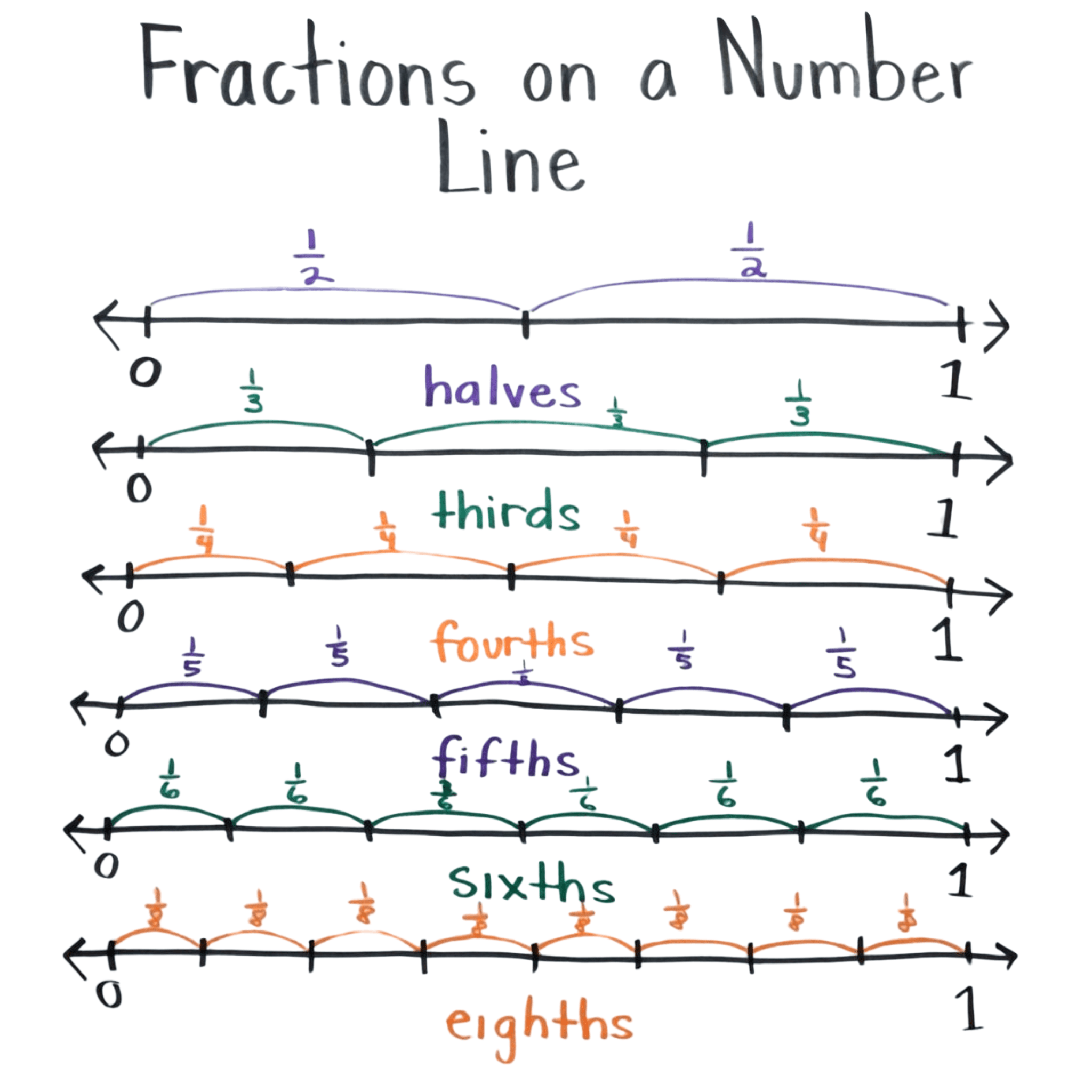
3. Use Number Lines to Show Fractions as Numbers
One of the biggest breakthroughs in teaching fractions comes when students finally realize: fractions are numbers too.
Number lines are perfect for driving this home.
Here’s what I like to do:
- Start with a number line from 0 to 1
- Divide it into equal parts (thirds, fourths, eighths…)
- Have students place fractions on the line and compare their positions
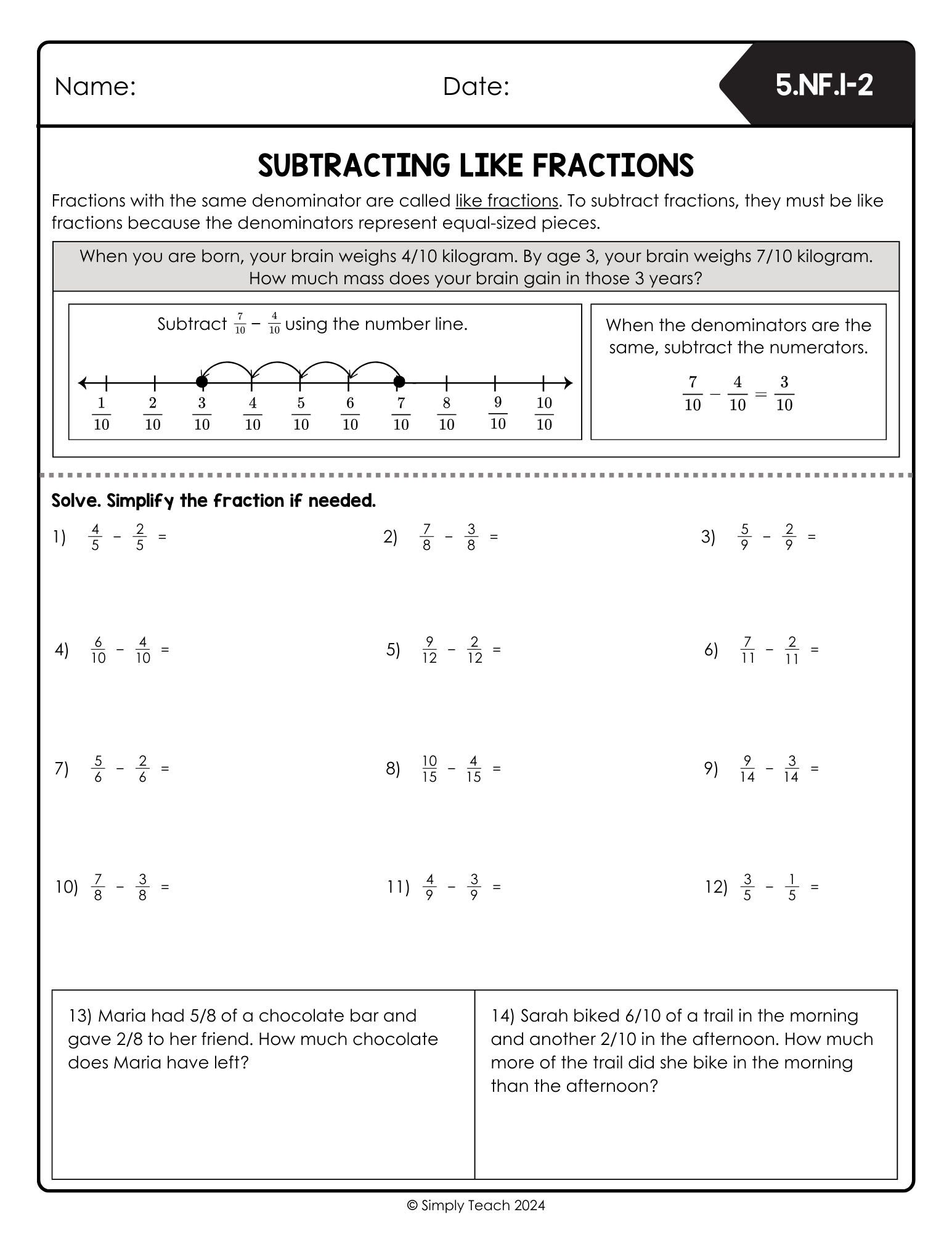
This makes it easier to teach ordering and comparing fractions, identifying equivalent fractions, and even adding or subtracting with like denominators.

4. Model Fraction Multiplication with Area Models
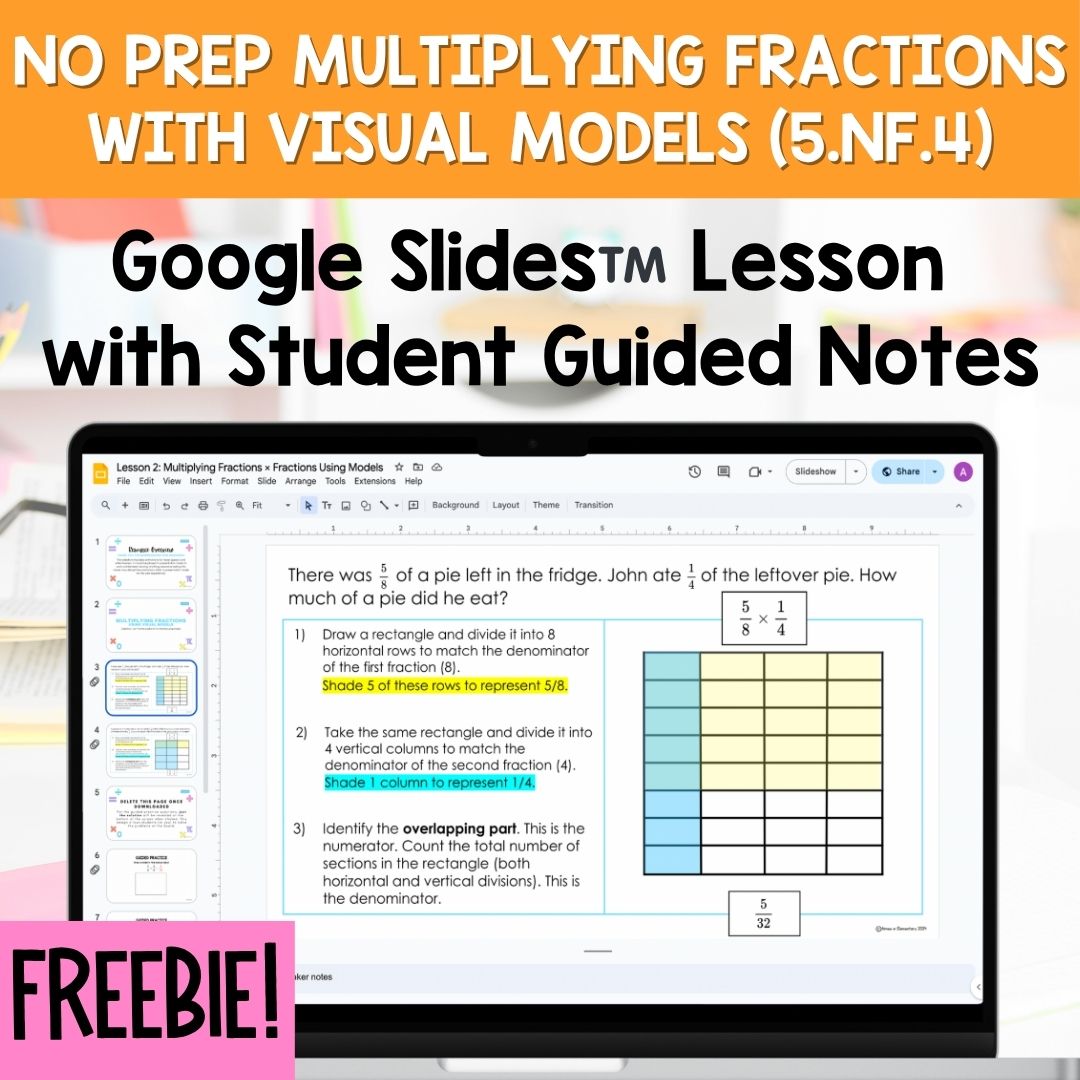
Once your students are ready for operations with fractions, fraction multiplication is a great place to bring back visuals.
Area models are my go-to for this.
Let’s say you’re solving 1/2 × 1/3.
Draw a rectangle. Shade half vertically. Then shade a third horizontally. The overlapping section? That’s 1/6—the product.
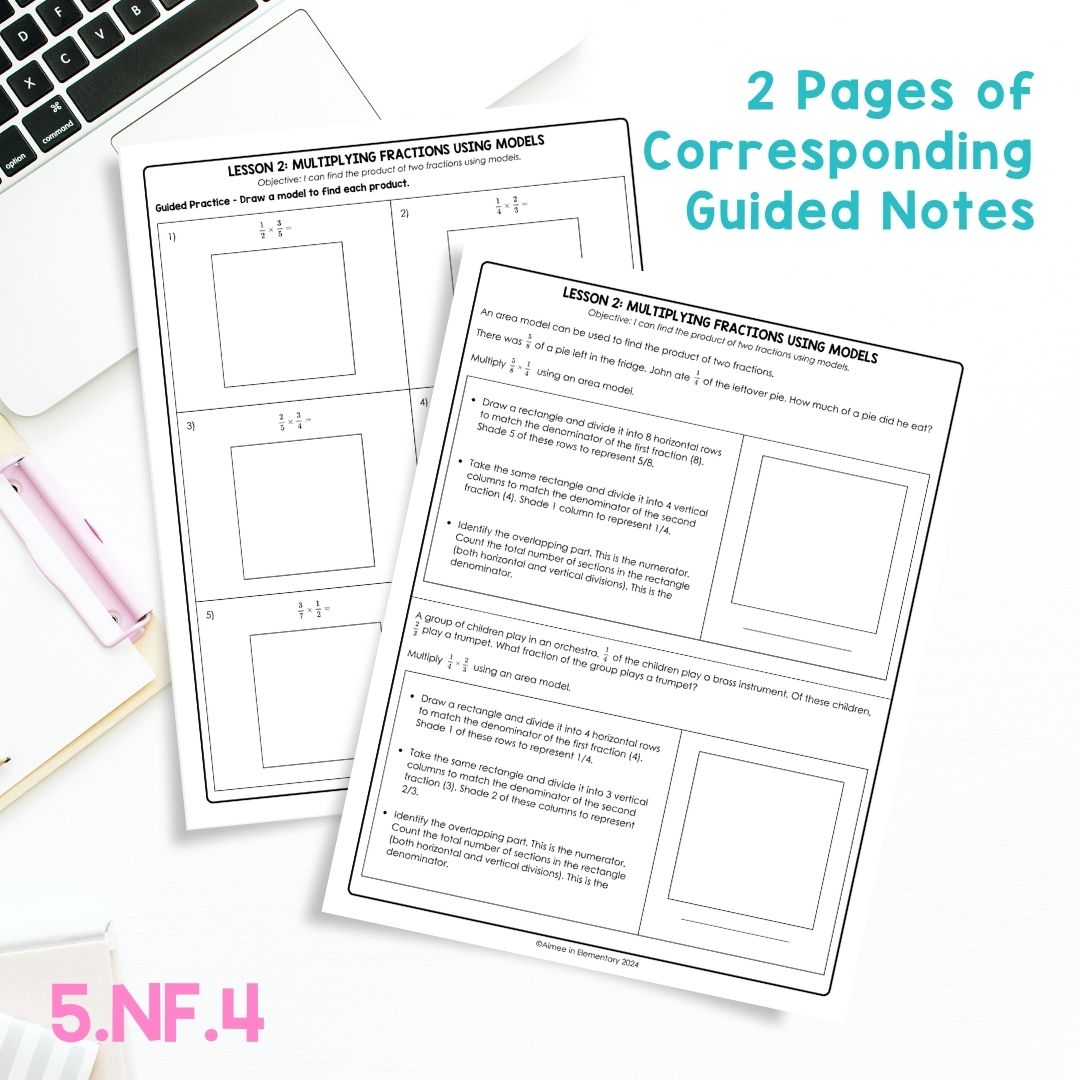
Area models not only help with procedural fluency, they give students a real understanding of why multiplying fractions results in a smaller number. Snag this FREEBIE to get you started!
5. Connect Fractions to Whole Numbers
This might sound obvious, but it’s easy to forget: fractions are made up of whole numbers.
And your students already know a lot about those!
Talk about how 2/2, 3/3, or 4/4 equals 1. Let them combine unit fractions to build wholes:
- “What do I need to add to 3/4 to make a whole?”
- “How many sixths are in 2?”
Making these connections reinforces that fractions are just part of the number system they already know—just with a few new rules.
Final Thoughts on Teaching Fractions
If you’ve ever felt like your students just weren’t “fraction people,” you’re not alone. But with the right tools and fraction strategies, you can shift that mindset—for them and for you.
Teaching fractions doesn’t have to feel like pulling teeth. Focus on visuals. Build slowly. Keep it hands-on. And most importantly, help students see fractions as something they can understand.
Because when it clicks? It’s one of the most satisfying parts of the math year.
Want Help Teaching Fractions?
If you’re looking for done-for-you fraction resources that bring these strategies to life, I’ve got you covered.
✨ Click here to check out my no-prep fraction resources for upper elementary
These include visual models, scaffolded practice, and easy-to-use activities that make teaching fractions way less stressful and way more effective.
